
In recent years, Buldak Bokkeum Myun (Korean Fire Noodles) has gained global popularity, sparking curiosity among many foreigners about Korea’s spicy flavors.
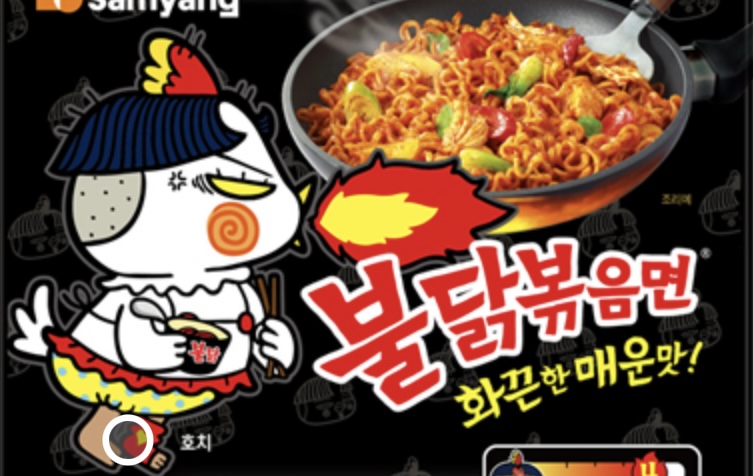
As this craze spread, more people began to take an interest in Korean cuisine.
Now, many even know the difference between ramen and ramyeon!
Asian cuisines — especially those from East Asia, like Korea, China, and Japan — may seem similar because the countries are geographically close.
However, there are actually many differences between them.
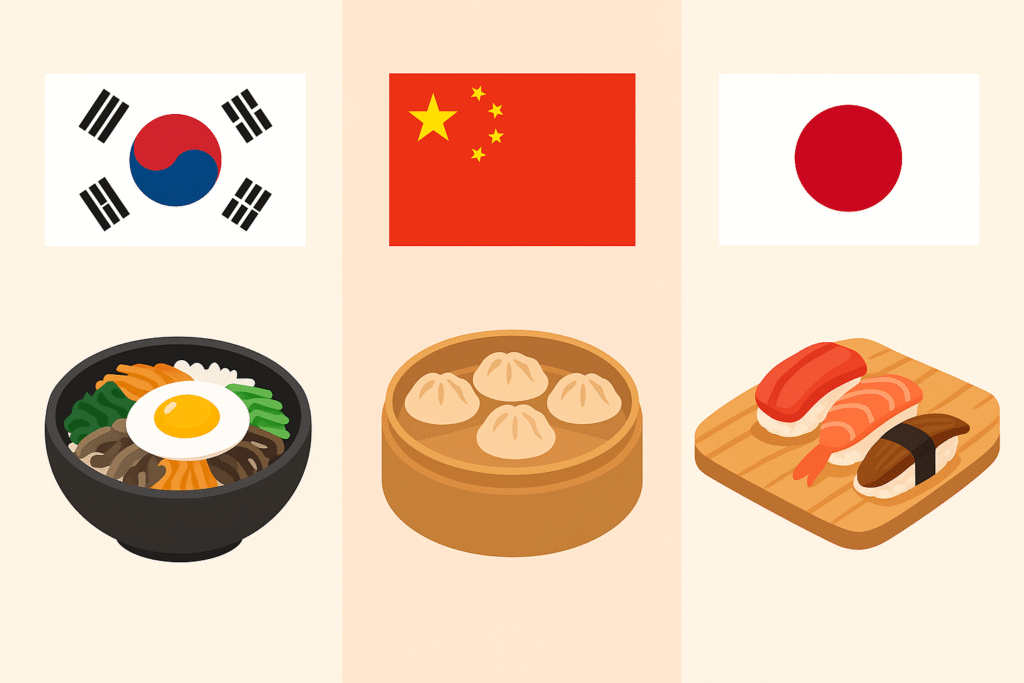
Among these, many people perceive Korean food as particularly spicy.
This perception existed even before the recent Fire Noodles trend, largely due to kimchi, one of Korea’s most iconic dishes.
[2 Sort of Kimchi at korean restaurant]
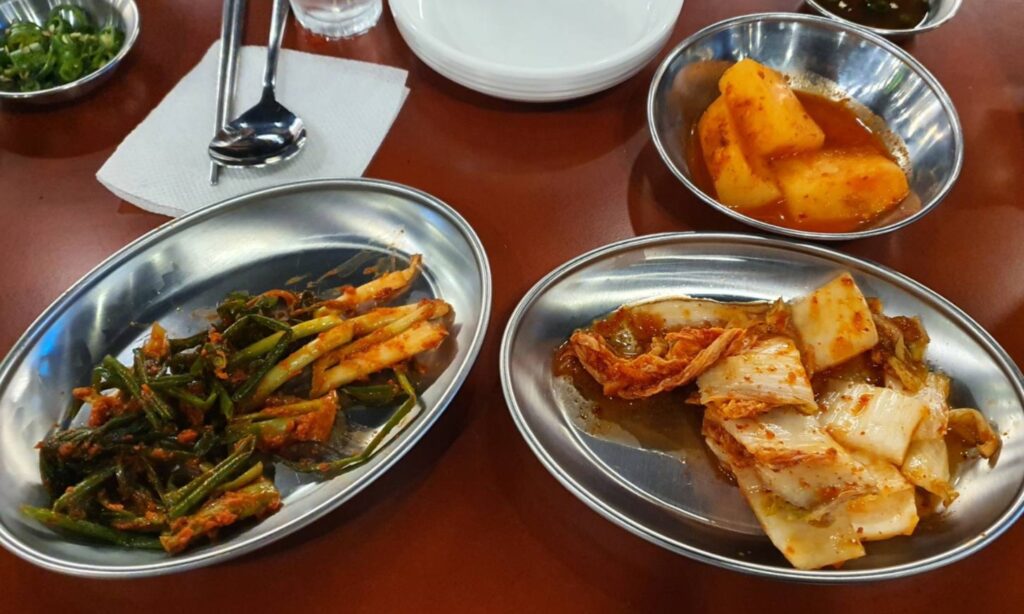
A typical Korean meal consists of a main dish, rice, and several side dishes (banchan).
Among these side dishes, kimchi plays a key role and is almost always served, no matter what the main dish is.
Today, I’d like to introduce a representative spicy main dish from Korean cuisine.
Main dishes come in various forms:
- Soups and stews where the broth is the highlight
- Grilled dishes featuring meat or fish
- Braised dishes where meat or fish is simmered in sauce
[spicy kimchi stew]
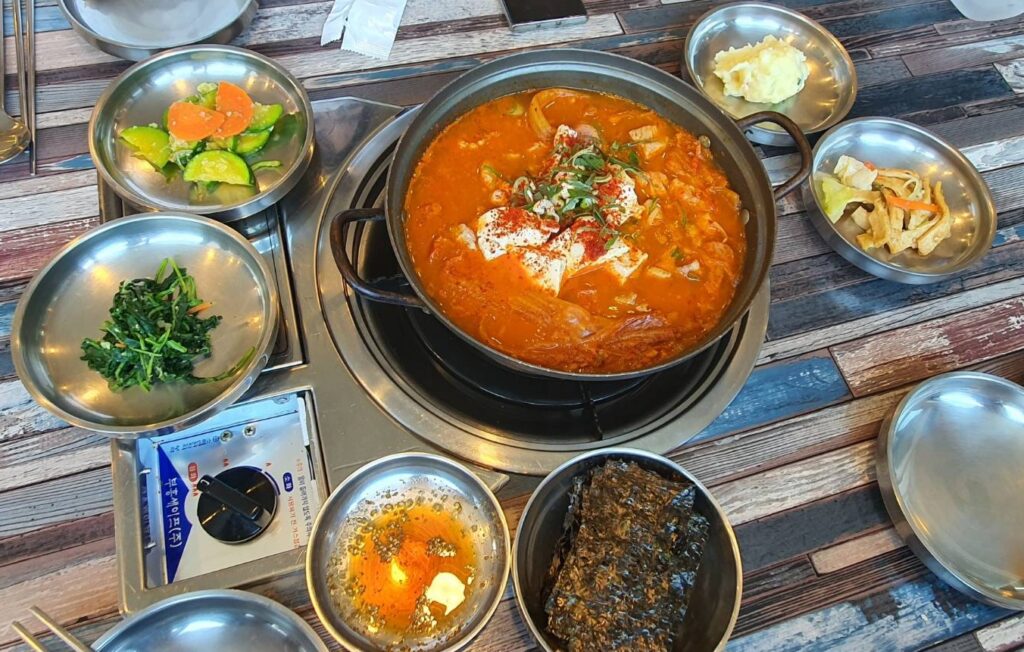
[KOREAN BBQ]
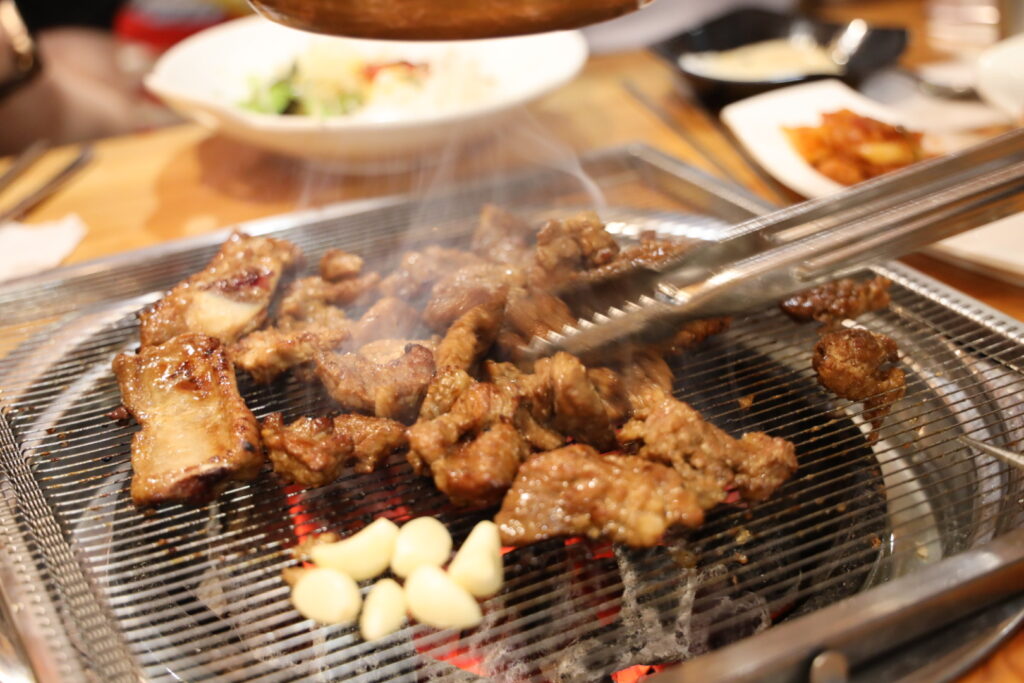
Many of Korea’s spiciest dishes are found in the stew or braised categories.
The dish I’ll be introducing today is Mae-kkom(Hot) Myeongtae Jorim(Spicy Braised Pollock).
[Spicy Myeongtae Jorim]
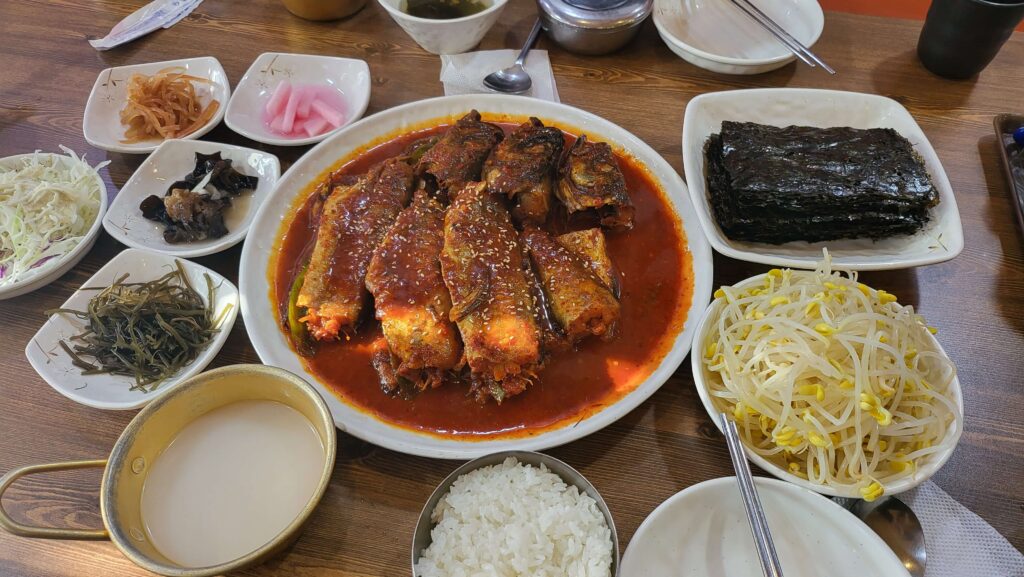
Myeongtae(Pollock) is one of the most beloved fish in Korea.
[variety of Myeongtae]
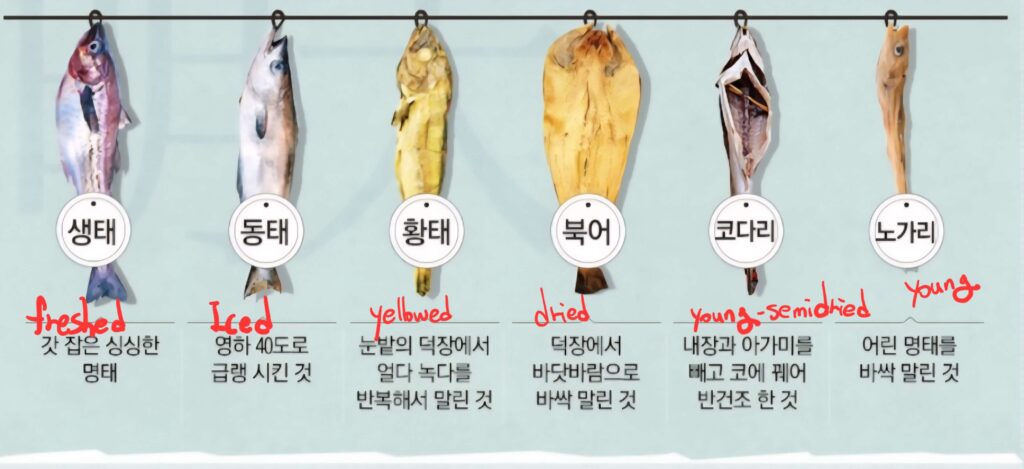
There are many ways Koreans enjoy Myeongtae :
- Bugeot-guk (Dried Pollock Soup): A clear, mild soup made by boiling dried pollock.
(When the dried fish turns slightly yellow, the soup is also called Hwangtae-guk(guk means soup) - Meoktae: Myeongtae repeatedly frozen and dried during winter, often enjoyed as a chewy snack with beer.
- Kkodari Jorim: A braised dish made by simmering younger, smaller Myeongtae in a spicy sauce.
- Myeongtae Jorim: A similar braised dish but made with larger Myeongtae.
Essentially, Kkodari Jorim and Myeongtae Jorim are the same dish, with the only difference being the size of the fish used.
When you order Myeongtae Jorim at a Korean restaurant, it’s served as part of a complete meal set, which includes the main dish, rice, and a variety of side dishes(banchan).
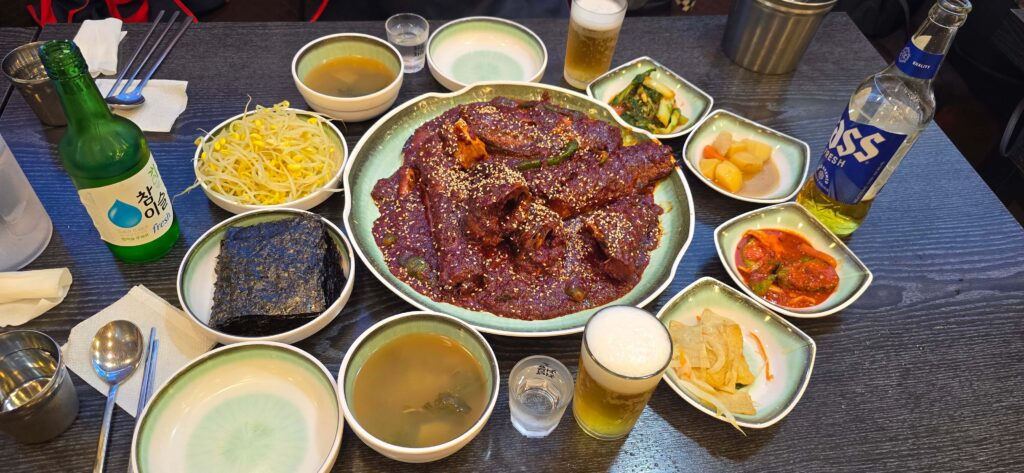
Here’s a useful tip when eating at restaurants in Korea:
- Side dishes (banchan) — excluding rice and the main dish — are almost always free and refillable, about 99% of the time.
- If a side dish cannot be refilled for free, there will be a large note posted on the wall menu.
(If there’s no note, you can assume it’s free!) - Even though they’re technically “unlimited,” it’s common to ask for a refill two or three times, and restaurants will gladly provide them.
However, rice may or may not be free, depending on the restaurant.
This will always be clearly stated on the menu.
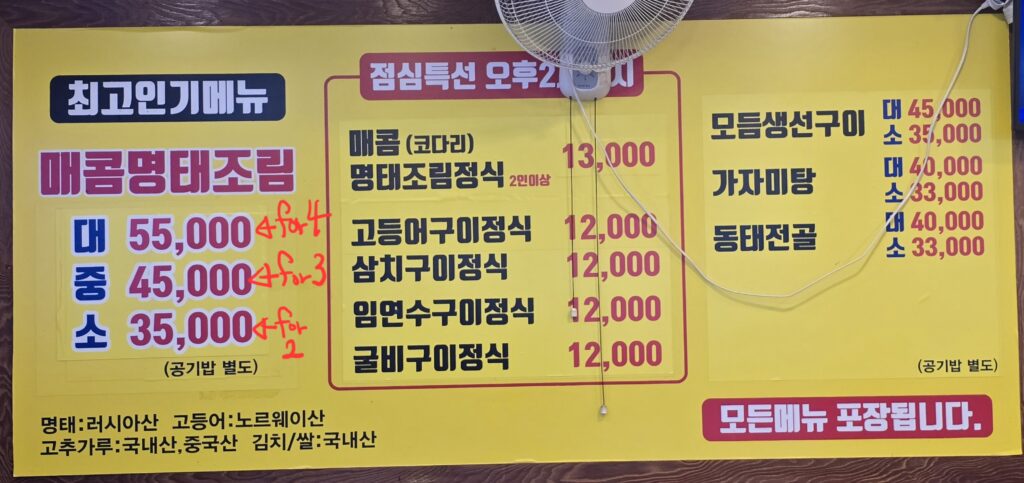
In Korea, if a main menu item says “소(small),” it usually serves for 2 people. If it says “중(meduim)” it serves for 3 people. If it says “대(large)” it serves for 4 people. So if you are alone, “소” food will be plenty for you.
The Myeongtae Jorim I’m introducing today is extremely spicy, even for many Koreans.
That’s why it’s usually eaten by wrapping it in gim(roasted seaweed) with bean sprouts to balance out the heat.
(Interestingly, Gim(roasted seaweed) has recently become popular worldwide thanks to the global Gimbap(also known as Kimbap) trend!)
[ KOREAN Soul Food – GIM]
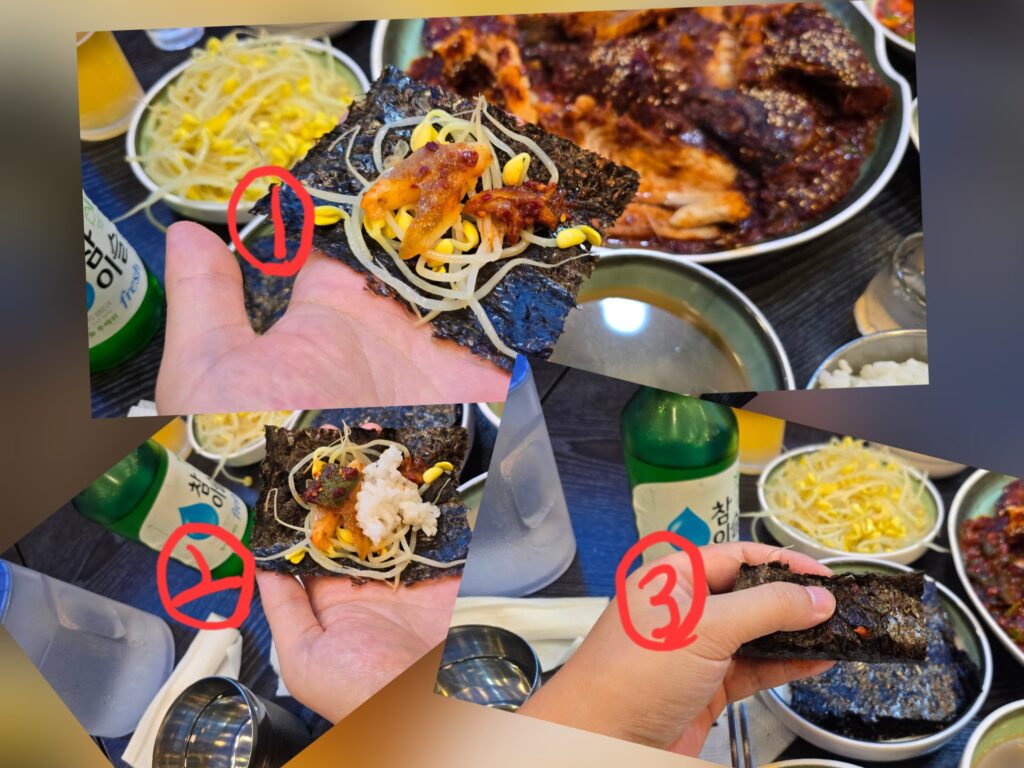
Many Koreans find eating spicy food like this helps relieve stress.
If you’re an adult, please enjoy these spicy foods with So-Maek(Soju + Maekju(Beer)).
So if you visit Korea, don’t just stick to fried chicken, samgyeopsal (grilled pork belly), or samgyetang (ginseng chicken soup), please challenge yourself to try some local vibe dishes like Myeongtae Jorim! 🌶️🍚