
Today, let’s take a look at some natural phrases you can use when making requests to staff at a restaurant.
“사장님(sa-jang-nim)” or “저기요(zeo-gi-yo)” or “여기요(yeo-gi-yo)”
In Korean restaurants, you don’t just make eye contact with a staff member and wait for them to come over to your table.
Instead, you slightly raise your hand and call out:
“사장님(sa-jang-nim)” or “저기요(zeo-gi-yo)” or “여기요(yeo-gi-yo)”
In English, these would roughly translate to something like “Boss”, “There”, “Here”.
Usually, using one of these three is enough.
Sometimes, in restaurants run by middle-aged women, you might hear people calling “이모(Imo)” as a friendly way to get attention.
You might see this often in Korean dramas, but in real restaurants these days, it’s becoming less common.
If you’re at a restaurant for the first time, using “이모(Imo)” could actually come across as rude, so I don’t recommend it.
Of course, the person serving you isn’t literally the “Boss”, but calling them “사장님(sa-jang-nim)” doesn’t mean they’ll actually go get the boss either—it’s just a polite and common way to address staff.
“저기요(zeo-gi-yo)” and “여기요(yeo-gi-yo)” are also perfectly normal, but personally, I tend to use “사장님(sa-jang-nim)” the most.
물 주세요(mul zu-se-yo) vs 물 좀 주세요(mul zom zu-se-yo)
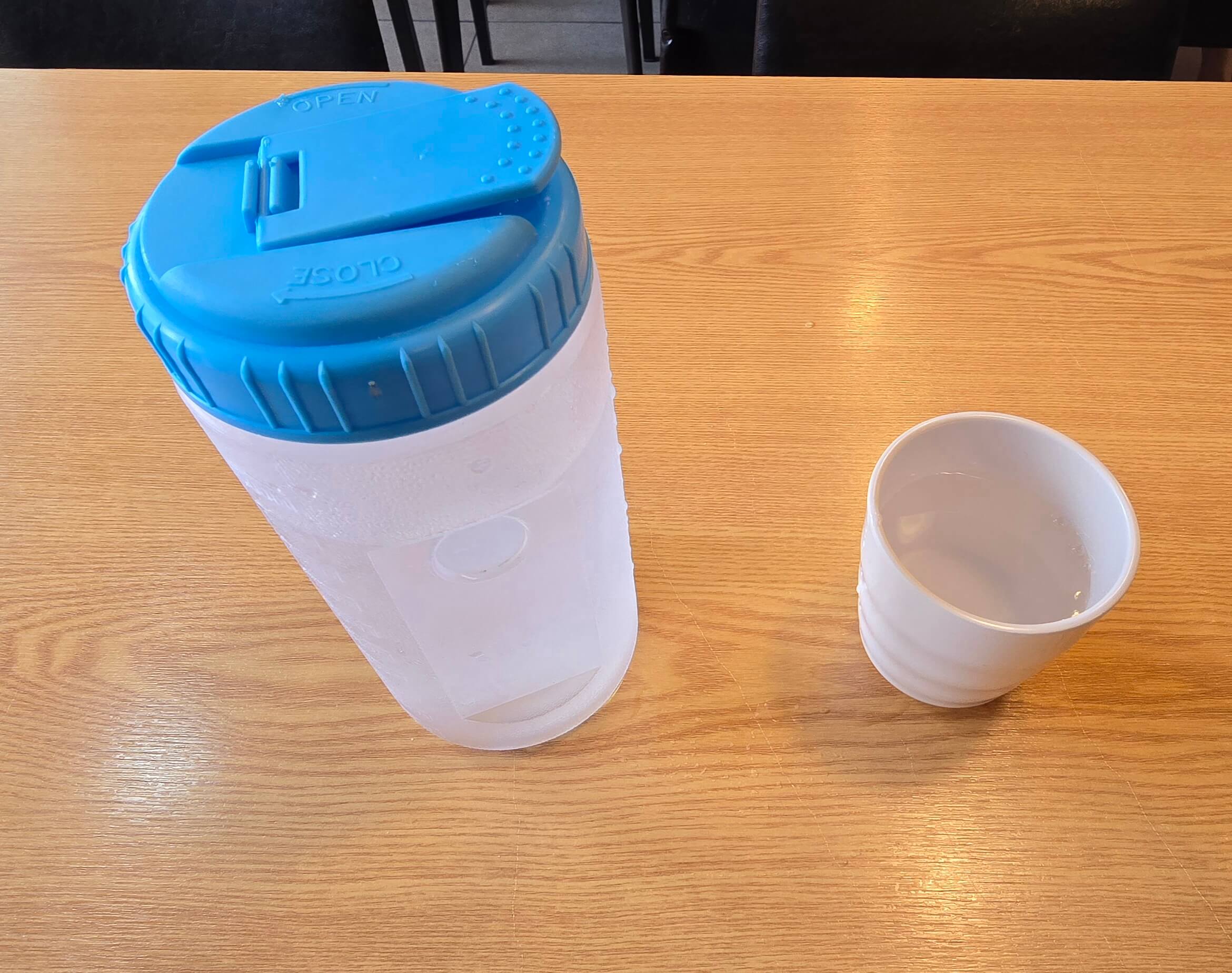
In English, these two sentences have slightly different meanings:
Can I get some water? vs Can I get water?
The first one is more suitable when asking for some drinking water at a restaurant,
while the second one sounds more like you’re asking, “Can I get water here?”—like asking if there’s a place where water is provided.
In Korean restaurants, when asking for water, it’s more natural to say
“물 좀 주세요(mul zom zu-se-yo)” rather than “물 주세요(mul zu-se-yo)”.
Just like adding some in English, adding “좀(zom)” makes it sound softer and more polite.
Technically, “좀(zom)” comes from “조금(zo-geum)”, which literally means a little, but saying “물 조금 주세요(mul zo-geum zu-se-yo)” is very awkward.
The most natural and polite expression is “물 좀 주세요(mul zom zu-se-yo)”, similar to saying Can I get some water?
In Korea, most side dishes are free and can be refilled.
So when asking for more kimchi, instead of saying “김치 더 주세요(Kimchi deo zu-se-yo)”,
it sounds much more natural to say “김치 좀 더 주세요(Kimchi zom deo zu-se-yo)”.
In Korea, it’s common to order one main dish and share it with the group.
Especially during dinner with drinks, the main dish is often labeled as 대, 중, 소 (large, medium, small).
You choose the appropriate size depending on the number of people, then share it.
At this time, you might need to ask for extra small plates for sharing.
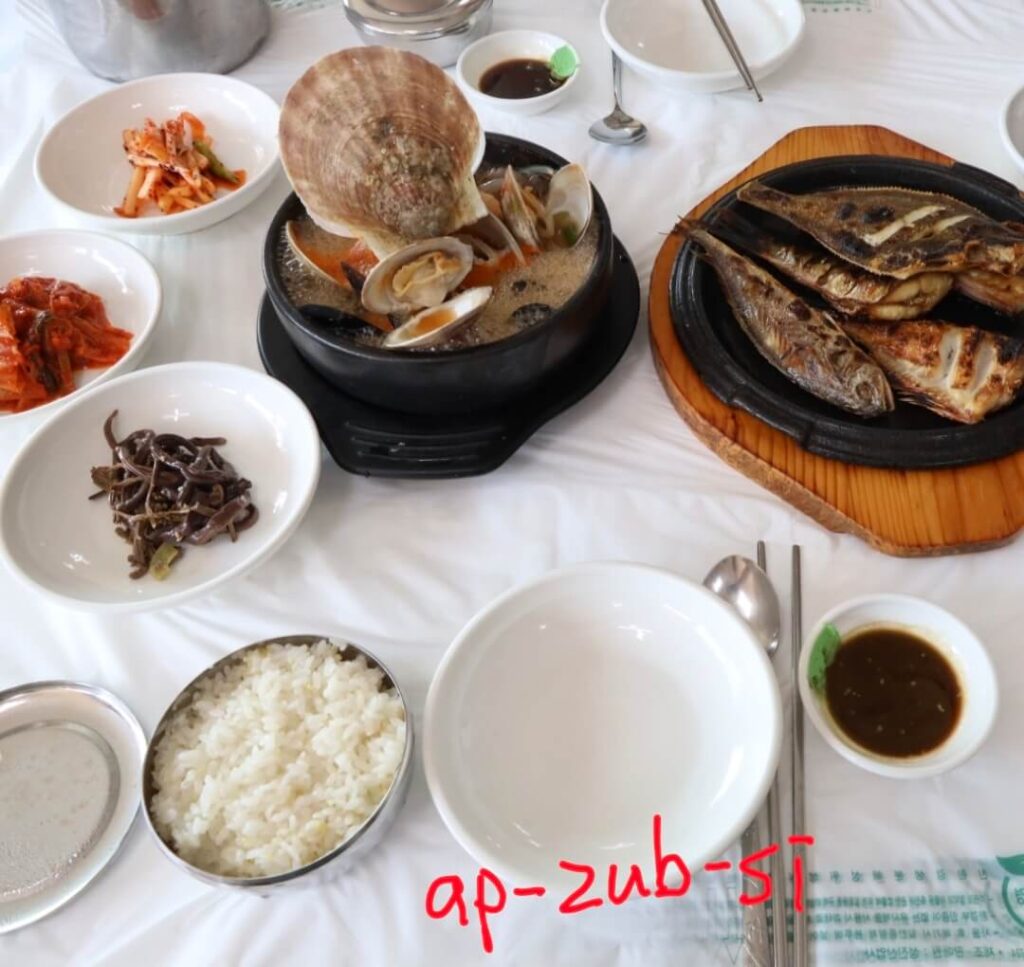
Usually, these 앞접시(ap-zub-si) are brought out automatically, but sometimes the staff might forget or you might need additional ones.
In that case, just like earlier examples with “좀(zom)”, you can say:
“앞접시 좀 주세요(ap-zub-si zom zu-se-yo)”.
앞접시 두개 주세요(ap-zub-si du gae zu-se-yo) vs 앞접시 두개만 주세요(ap-zub-si du gae man zu-se-yo)
Sometimes, you want to specify exactly how many you need.
In this case, instead of saying “앞접시 두개 주세요(ap-zub-si du gae zu-se-yo)”,
it sounds more natural to say “앞접시 두개만 주세요(ap-zub-si du gae man zu-se-yo)”.
Of course, if you were to translate directly into English, you would say:
“Please give me 2 small plates.”
Adding “만(man)” literally corresponds to “just”, so the translation would be:
“Please give me just 2 small plates.”
While this might sound a bit strange in English,
in Korean, “앞접시 두개만 주세요(ap-zub-si du gae man zu-se-yo)” sounds softer and more natural,
whereas “앞접시 두개 주세요(ap-zub-si du gae zu-se-yo)” feels a bit like how a foreigner might speak.
The same goes for ordering more drinks.
Saying “소주 한병 더 주세요(soju han byung deo zu-se-yo)” is fine,
but you can also say “소주 한병만 더 주세요(soju han byung man deo zu-se-yo)” to sound a bit more natural.