
Today, I’d like to talk about “Korean-specific behaviors and speech habits” that are currently going viral online. These are things we usually do without thinking, but seeing them written down makes you realize, “Whoa, is this literally me?” and gives you chills from how relatable they are. How many of these apply to you?
Here are some unique characteristics of how Koreans speak:
1. Conversations can’t start without “Ah”
For Koreans, a sentence is only truly complete if it starts with “Ah(아).” Simply saying “It’s cold(추워)” feels a bit awkward or dry. But saying “Ah, it’s cold(아 추워)” makes it feel natural. From “Ah, I’m hungry(아 배고파)” to “Ah, really?(아 진짜?)”, it’s no exaggeration to say that the starting point of every emotion is “Ah.”
2. Answering “I don’t know” followed by the right answer
There’s a reflexive answer we give when asked a question: “Molla(몰라)” (I don’t know).
- “Where did he go?” -> “I don’t know, he went to the PC cafe.(몰라. 피씨방 갔어)” Even when we clearly know the answer, we start with “I don’t know” before giving the information. This strange speech pattern is an incredibly familiar part of our dialogue.
3. Repeating the keyword for emphasis
When we talk, we have a habit of repeating the core word at the end of the sentence to emphasize it.
- “Is this domestic?(이거 국산이야?)” -> “It’s domestic, domestic(국산이야, 국산.).”
- “Where should we go?(어디 갈까?)” -> “Let’s go to a cafe, a cafe(카페가자, 카페.).”
- “Does your stomach hurt?(배아파?)” -> “Take some medicine, medicine.(약먹어, 약.)” It feels like our intention is only accurately conveyed if we say it twice!
Beyond speech habits, there are also unique behaviors specific to Koreans:
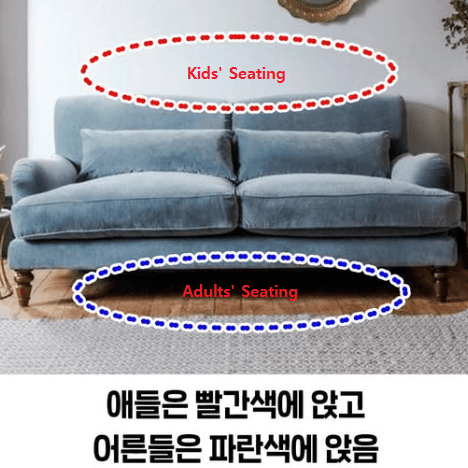
1. A sofa is not for sitting; it’s just a ‘backrest’
Why do we insist on sitting on the hard floor even when there’s an expensive, plush sofa right there? For Koreans, a sofa isn’t exactly a place for your butt; it’s more of a ‘luxury backrest’ to lean against while sitting on the floor. Even if we do get on the sofa, we usually sit cross-legged to find true peace of mind.
2. The Mystery at the Door: Push, Pull, or Fixed
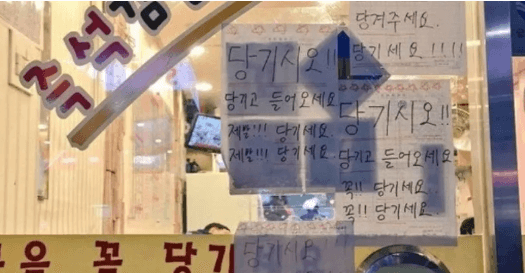
There’s a joke that the Korean words Koreans have the hardest time reading are the signs on doors.
- Push: Push immediately.
- Pull: Try pushing first. (Only pull if it doesn’t open.)
- Fixed Door: Even knowing it won’t open, you have to give it a shake just in case. For the “Palli-Palli” (hurry-hurry) culture, perhaps the will to get through the door is more important than reading the sign!
3. The climax of laughter is ‘Clapping’
When something is truly hilarious, Koreans don’t just laugh. We gather all our energy and clap while we laugh. This “clapping-laughter” is a representative trait of the dynamic reactions Koreans have.
Closing
Looking at it this way, you can really feel the warm yet impatient personality and the unique linguistic habits of Koreans. How many of these did you nod along to? Most Koreans would probably laugh and say, “This is literally me!”
Try sharing this with your Korean friends or family! They might be clapping and laughing as they read it.