
These days, I have this weird little ritual. After dinner, I take my usual neighborhood stroll, but I always stop by the claw machine arcade just to check out what new characters have landed.
And seriously? I just realized that there are now seven dedicated claw machine spots within a 10-minute walk of my place! A year ago, there was literally just one. The growth is insane.
Claw games (or “crane games”) have been one of the biggest arcade hits globally for over a decade. But here in Korea, we’ve seen the number of these specialty shops explode in just the last year or two.
Sure, every country has its own trends and culture, but just like in its home country, Japan, the claw machine is now a huge, mainstream thing here in Korea.
[Game Machines in Game Center]
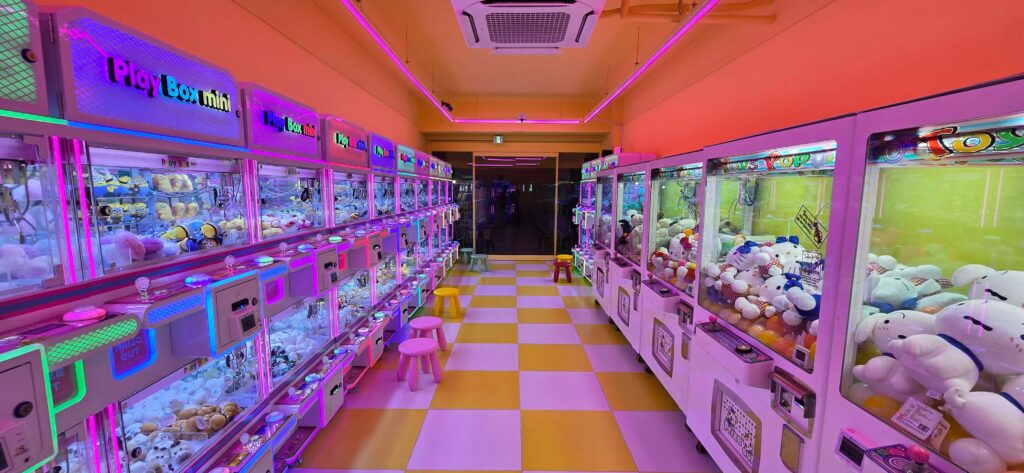
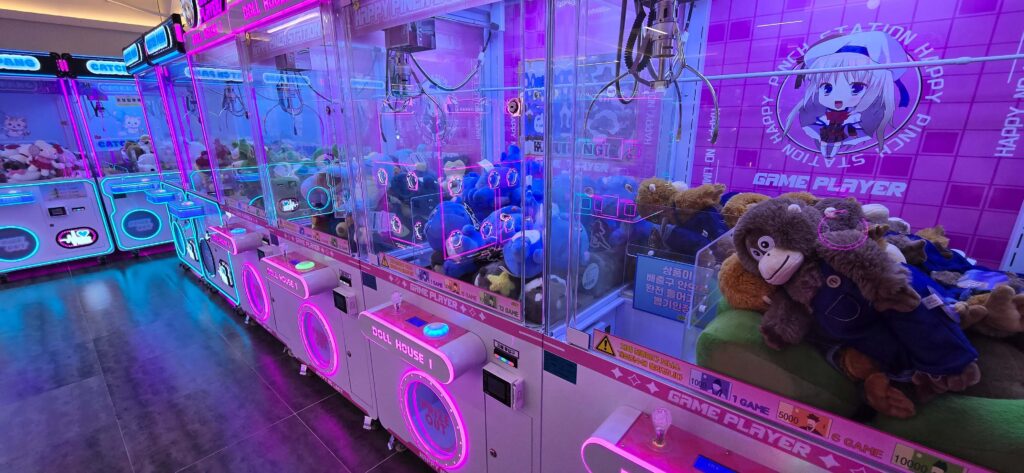
It’s not just a big deal for teens who are naturally into cute plushies. It’s a massive phenomenon among college students (guys and girls in their 20s), and it’s catching on big time with adults in their 30s and 40s, too! Right now in Korea, you can constantly spot people—from their teens all the way to their 40s, sometimes even 50s—walking around with one or two dolls hanging off their backpacks like a badge of honor.
What about the Korean version of the craze?
- Everywhere You Look: You’ll find these shops not just in the main downtown areas, but literally in the smallest neighborhood alley where a few small restaurants are gathered. While downtown shops can be big, the local ones are usually small, like a 10-pyeong (around 33m²) space. The difference is that in Korea, these dedicated claw machine shops are often sitting right next to a regular restaurant, not always inside a huge arcade like in Japan.
- Prize Focus: The prizes are mostly just dolls. We see all the classics like Crayon Shin-chan, One Piece, Wallace and Gromit, and Cookie Monster, but also new hits like the tiger from K-pop Demon Hunters or the Jinro Soju mascot. But unlike Japan, you don’t really see a lot of snack sets or household goods; it’s almost all character plushies.
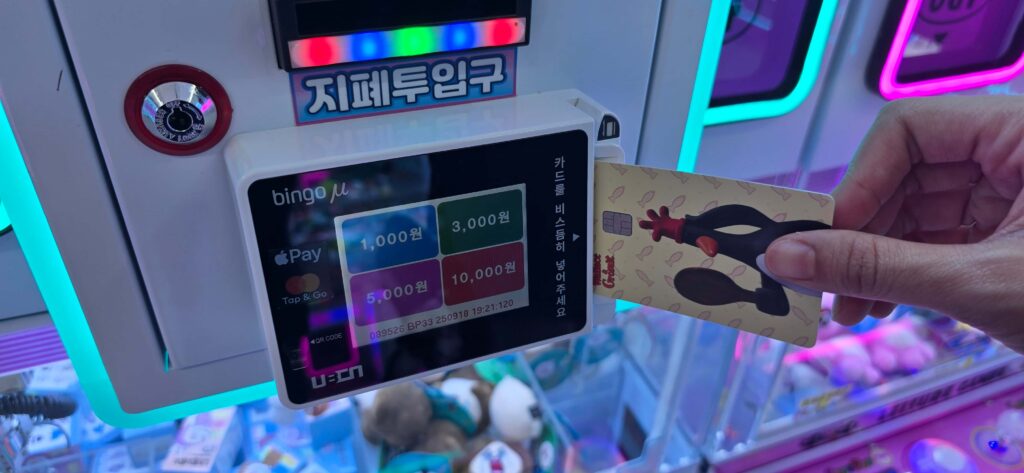
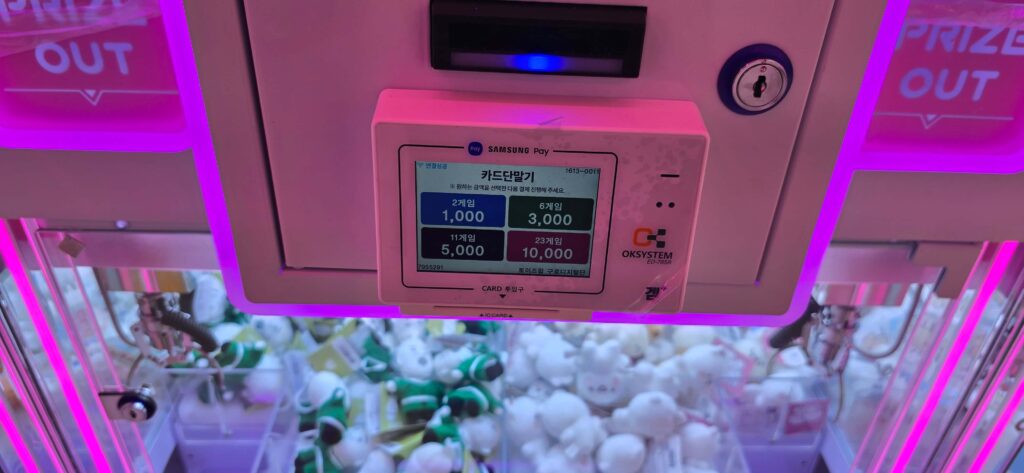
- Easy Pay: Fitting the whole cashless trend in Korea, most machines accept card payments now. It’s usually 1,000 KRW (about $0.75) per play, but to reflect the current tough economy, it’s often 1,000 KRW for two games these days. (But forget about using a 500 KRW coin for one game—it’s always 1,000 KRW minimum).
- Super Simple: Korean machines are usually all about that simple grab. While a few might make you push the doll onto a little conveyor belt, most are so straightforward that anyone can figure out the game instantly.
[Easy Payment method]
[Prize : K-Pop Demon Hunters Doll]
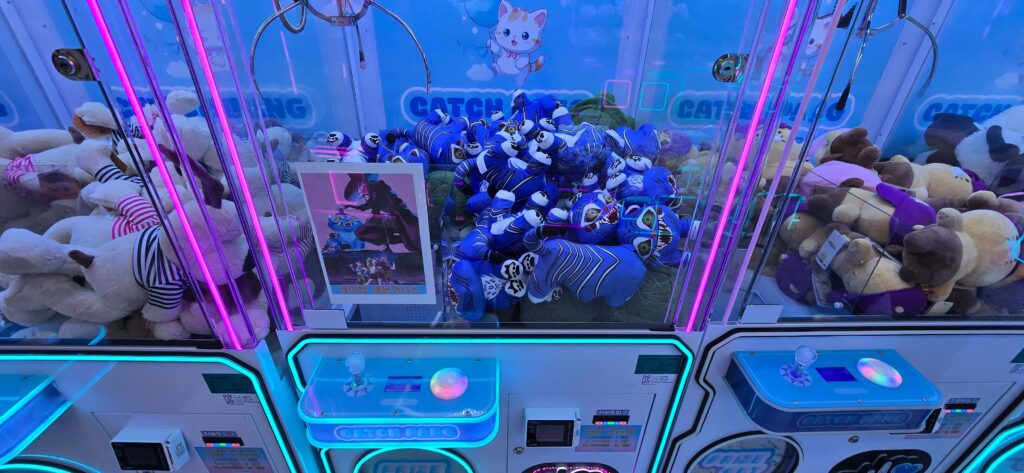
[Usually 2 games for 1,000 won]
💡 Why Are We Hooked?
People think the main reasons for the claw machine’s huge success are:
- Cheap Thrills & Wins: You spend a tiny bit of cash to get the instant satisfaction and fun of a challenge and winning a prize.
- Economic Connection: Some experts believe that when the economy is slow, people tend to try their ‘luck’ on something low-cost and chase that ‘Sohwakhaeng’ (소확행: Small but Certain Happiness). That makes these games even more popular.
- Collector’s Paradise: They tap into that deep desire to collect specific characters or those special limited-edition prizes.
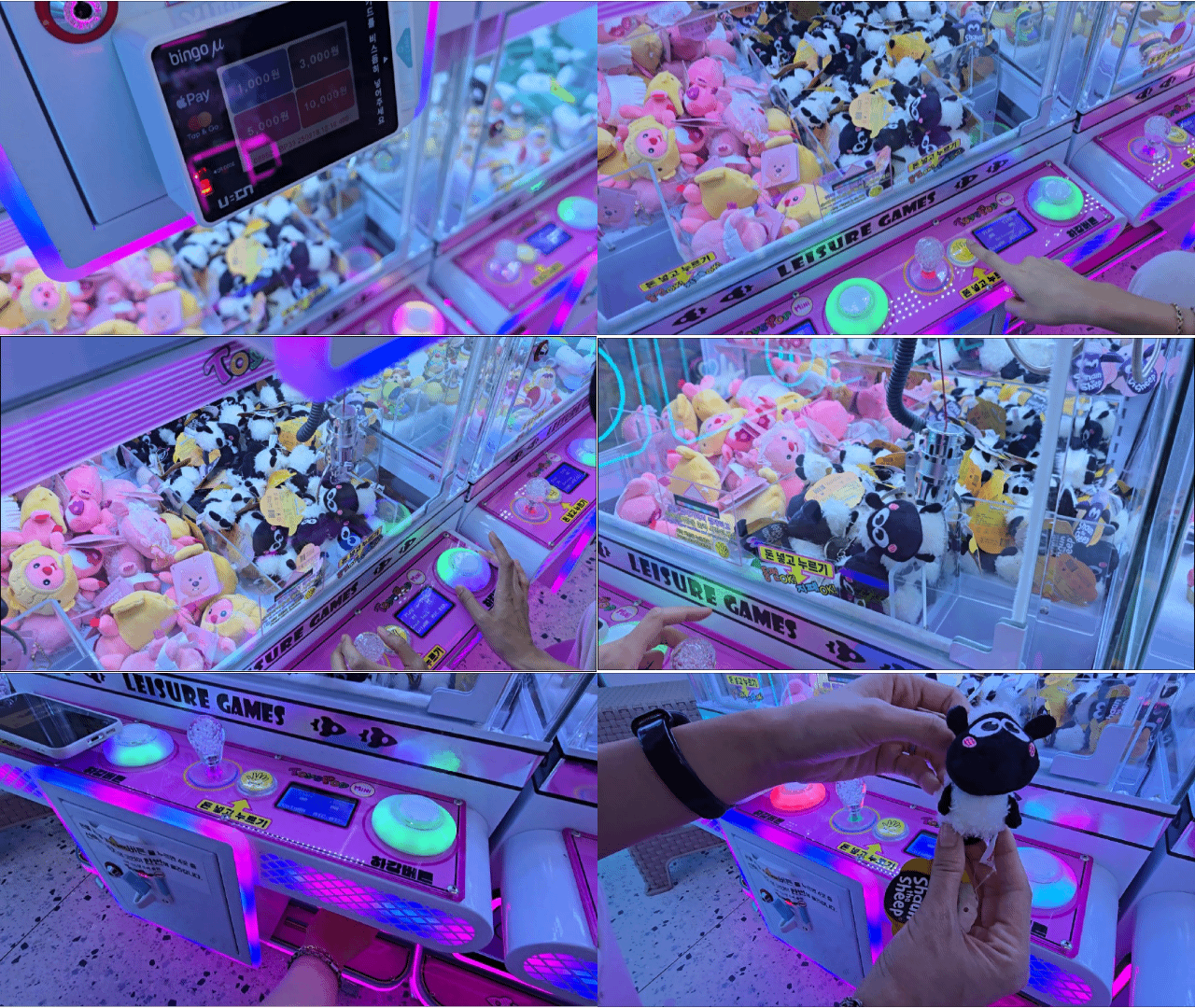
[Get a baby Shaun the sheep]
💰 Pro-Tip: Save Your Cash!
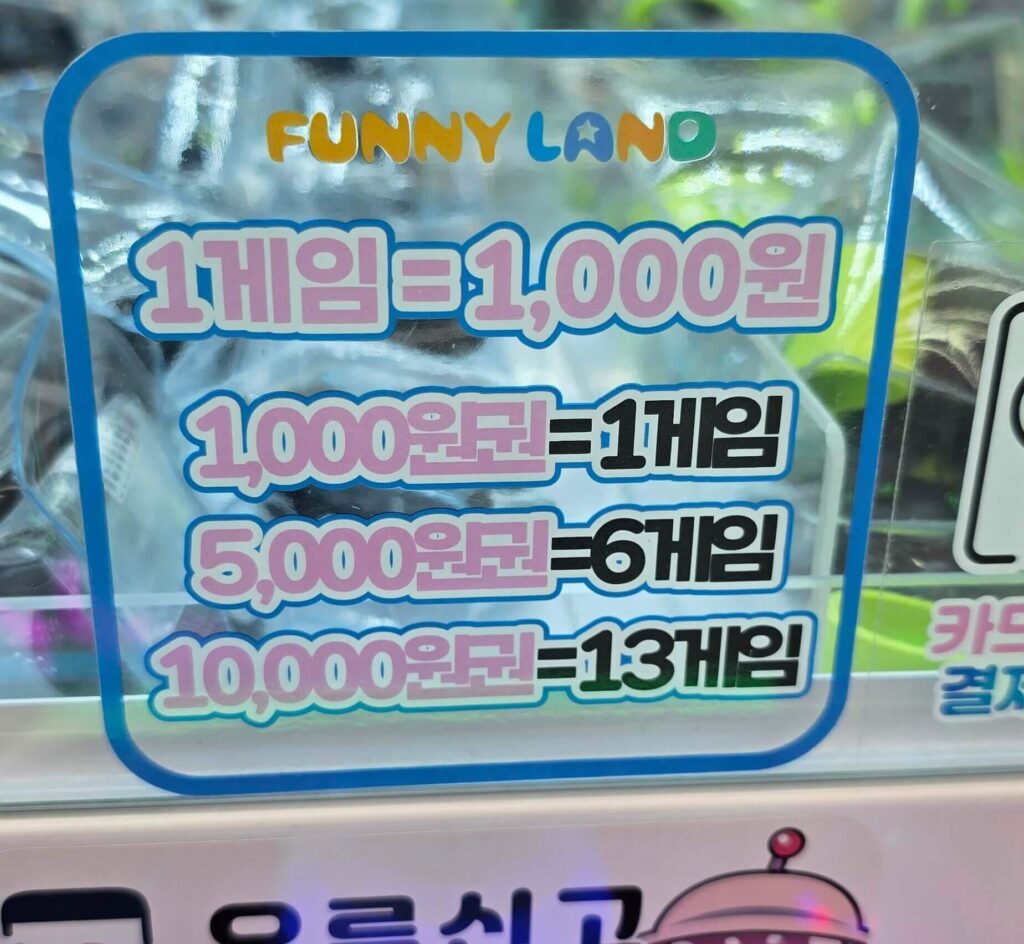
Most machines let you pay in units of 1,000, 3,000, 5,000, or 10,000 KRW. But here’s the kicker: paying a big amount usually DOESN’T get you any bonus games! To keep your money safe, the best strategy is to pay the minimum fee repeatedly to try your luck many times.
Of course, not all machines lack bonus games, and there are cases, like the ones below, where you can get 6 games for 5,000 won or 13 games for 10,000 won. However, don’t get tempted by the bonus games and spend too much money.
Sadly, you won’t find helpful English instructions in most Korean claw machine shops. So, I’ve attached a video below on how to actually play the game—watch it and have a blast!
As for the game results? Well, that’s all up to luck (and your crane skills)! 😉